When reviewing the Aged Receivable or Aged Payable report in Odoo, you may notice an option to calculate aging based on the Invoice Date or based on the Due Date.
At first, these options may seem similar, but they serve different business purposes.
Let's understand them with a simple example.
Example
Suppose you create an invoice with the following details:
- Invoice Date: 1 July 2026
- Payment Terms: 30 Days
- Due Date: 31 July 2026
- Invoice Amount: ₹10,000
Now let's see how the aging report behaves.
Aging Based on Invoice Date
When you choose Invoice Date, Odoo calculates the age of the invoice from the day it was created.
For example:
- Today: 20 July 2026
- Invoice Date: 1 July 2026
The invoice is 19 days old, even though the customer still has time to pay.
This option helps answer:
"How long has this invoice existed?"
It is useful for:
- Tracking invoice history
- Measuring billing activity
- Internal reporting
Aging Based on Due Date
When you choose Due Date, Odoo starts counting only after the payment due date.
Using the same example:
- Due Date: 31 July 2026
- Today: 20 July 2026
The invoice is not overdue yet, so it appears in the Not Due bucket.
If today were 10 August 2026, the invoice would be 10 days overdue.
This option answers: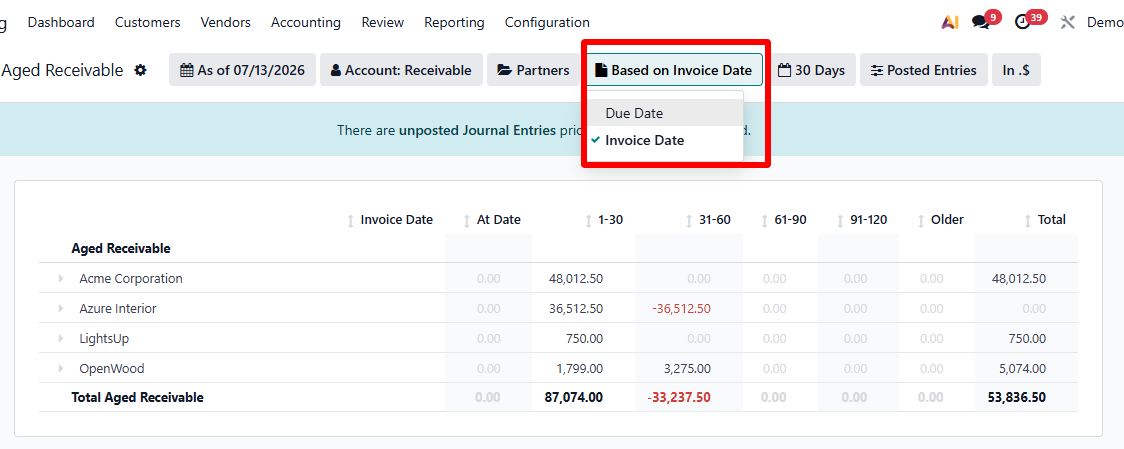
"How late is the customer in making payment?"
It is useful for:
- Collections and payment follow-up
- Credit control
- Managing overdue invoices
Quick Comparison
| Invoice Date Aging | Due Date Aging |
|---|---|
| Starts from the invoice creation date | Starts from the payment due date |
| Shows how old the invoice is | Shows how overdue the invoice is |
| Good for internal analysis | Best for payment follow-up and collections |
| Invoice can show aging even before payment is due | Invoice remains "Not Due" until the due date passes |
Which One Should You Use?
Choose Invoice Date when you want to understand how long invoices have been in the system.
Choose Due Date when your focus is on outstanding payments and overdue customer balances.
For most accounting and collection activities, Due Date aging is the preferred option because it reflects the customer's payment status more accurately.
Final Thoughts
Both aging methods are useful—they simply answer different business questions.
- Invoice Date tells you how old the invoice is.
- Due Date tells you how late the payment is.
Understanding this difference helps you interpret Odoo's aging reports correctly and make better financial decisions.